研究Studies
日常言語コンピューティング
- Ichiro Kobayashi, “From Everyday Language Computing to Beyond”, in Envisioning the Future: Continuing the Legacy of Professor Michio Sugeno, Panel discussion at WCCI 2024, The IEEE World Congress on Computational Intelligence, Yokohama, Japan, June 30, 2024
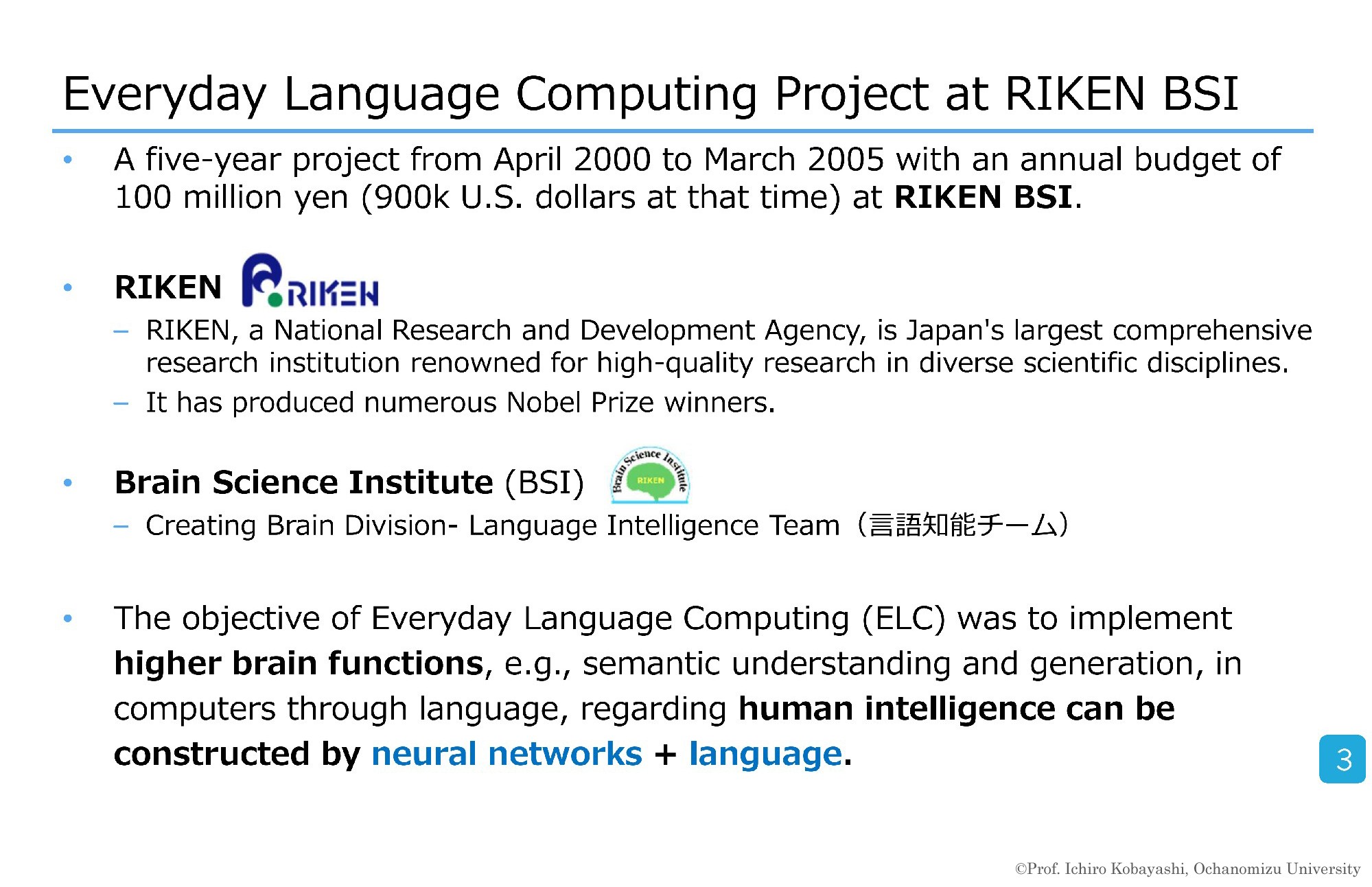
理化学研究所における『日常言語コンピューティング』プロジェクト
Everyday Language Computing (ELC) project was a five-year project.
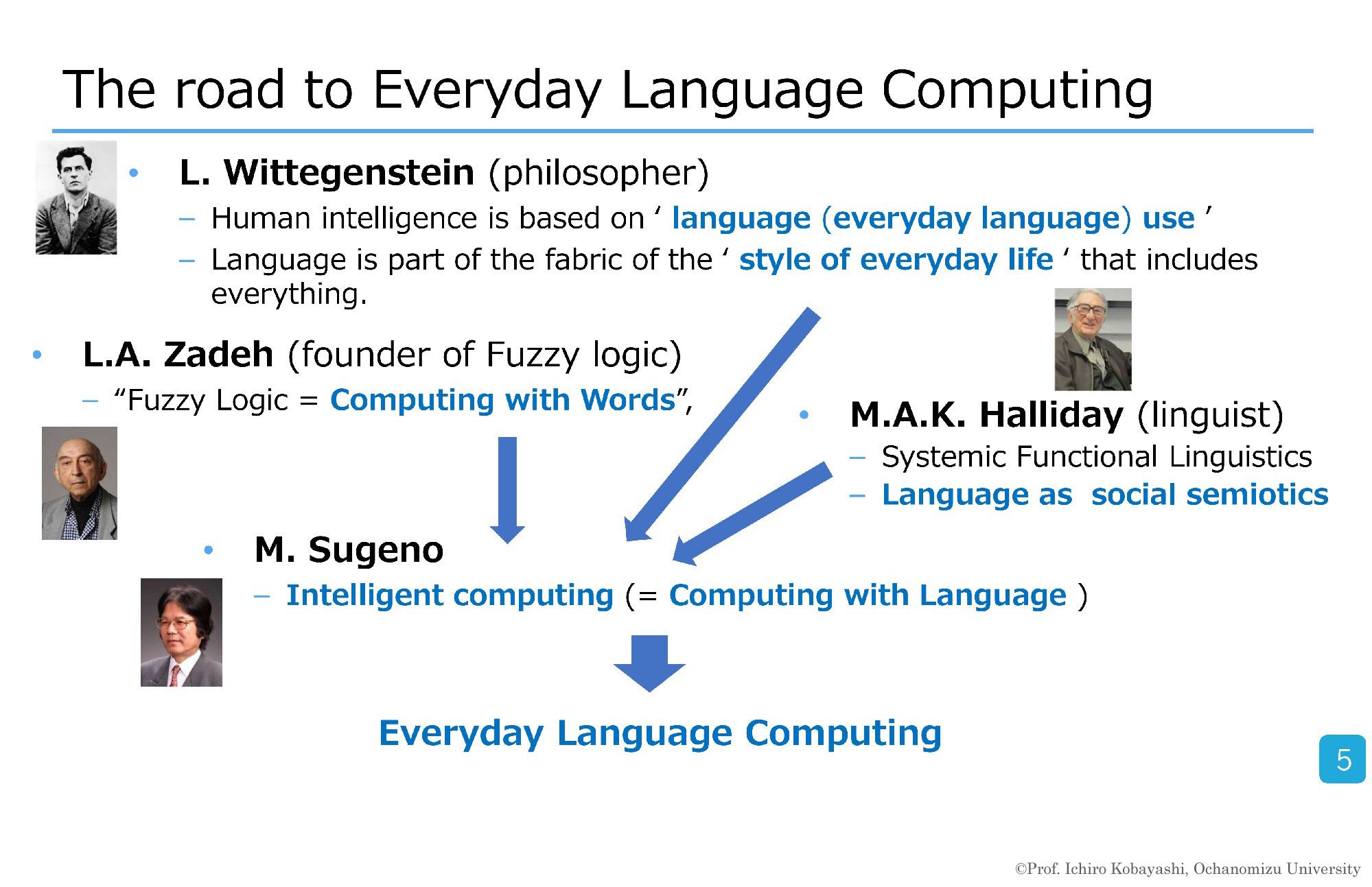
Prof. Sugeno was very influenced by the later philosophy of Wittegenstein. According to Wittegenstein, human intelligence was based on the use of language and he argued that language was part of the style of everyday life.
The linguistics to discuss the social use of language is Systemic Functional Linguistics as represented by M.A.K.Halliday.
Furthermore, Prof. Zadeh proposed the idea that Fuzzy logic is computing with words.
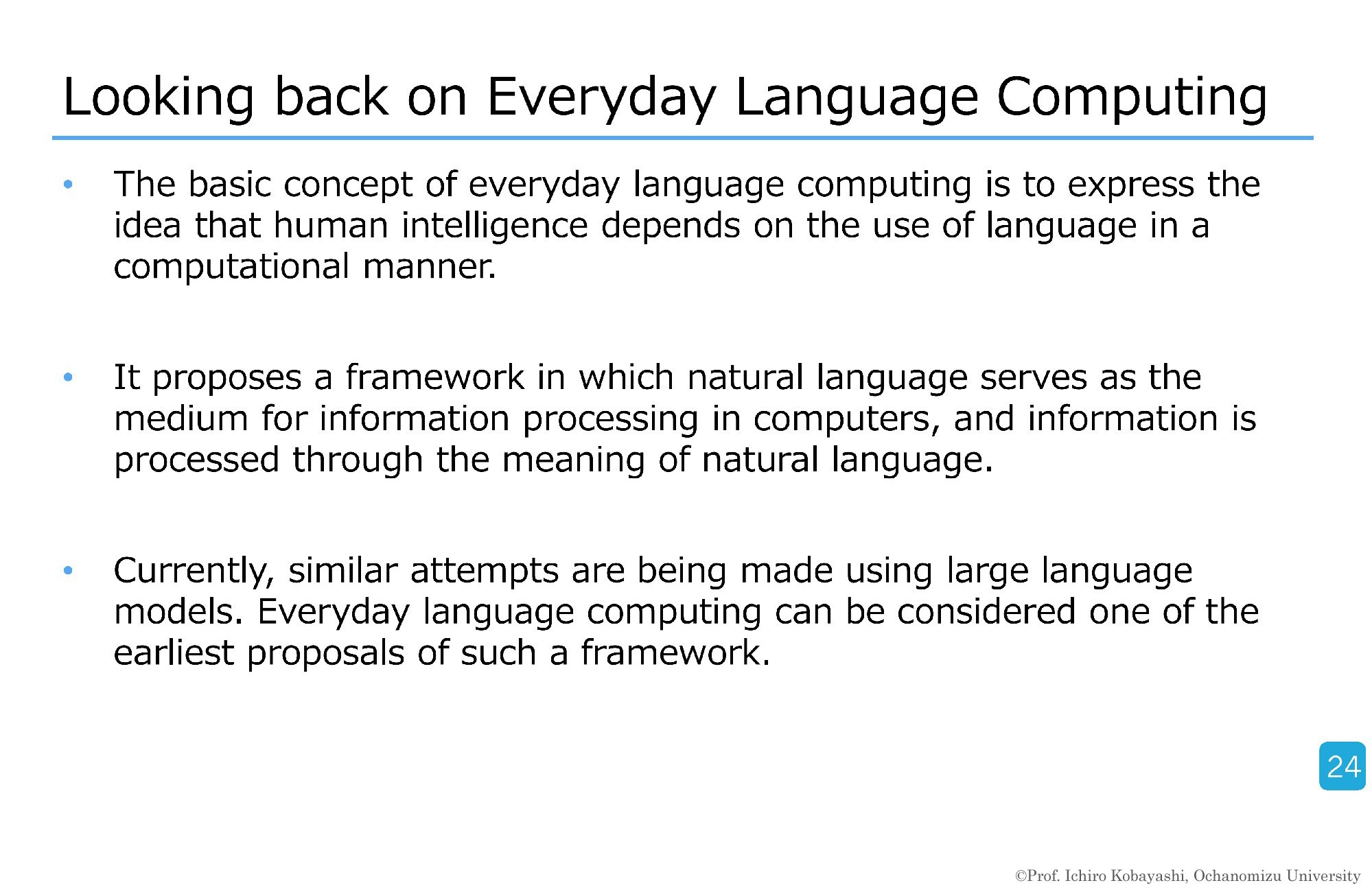
Based on all these ideas, Prof. Sugeno proposed the framework of intelligent computing, where computing is done with language. This was later named everyday language computing.
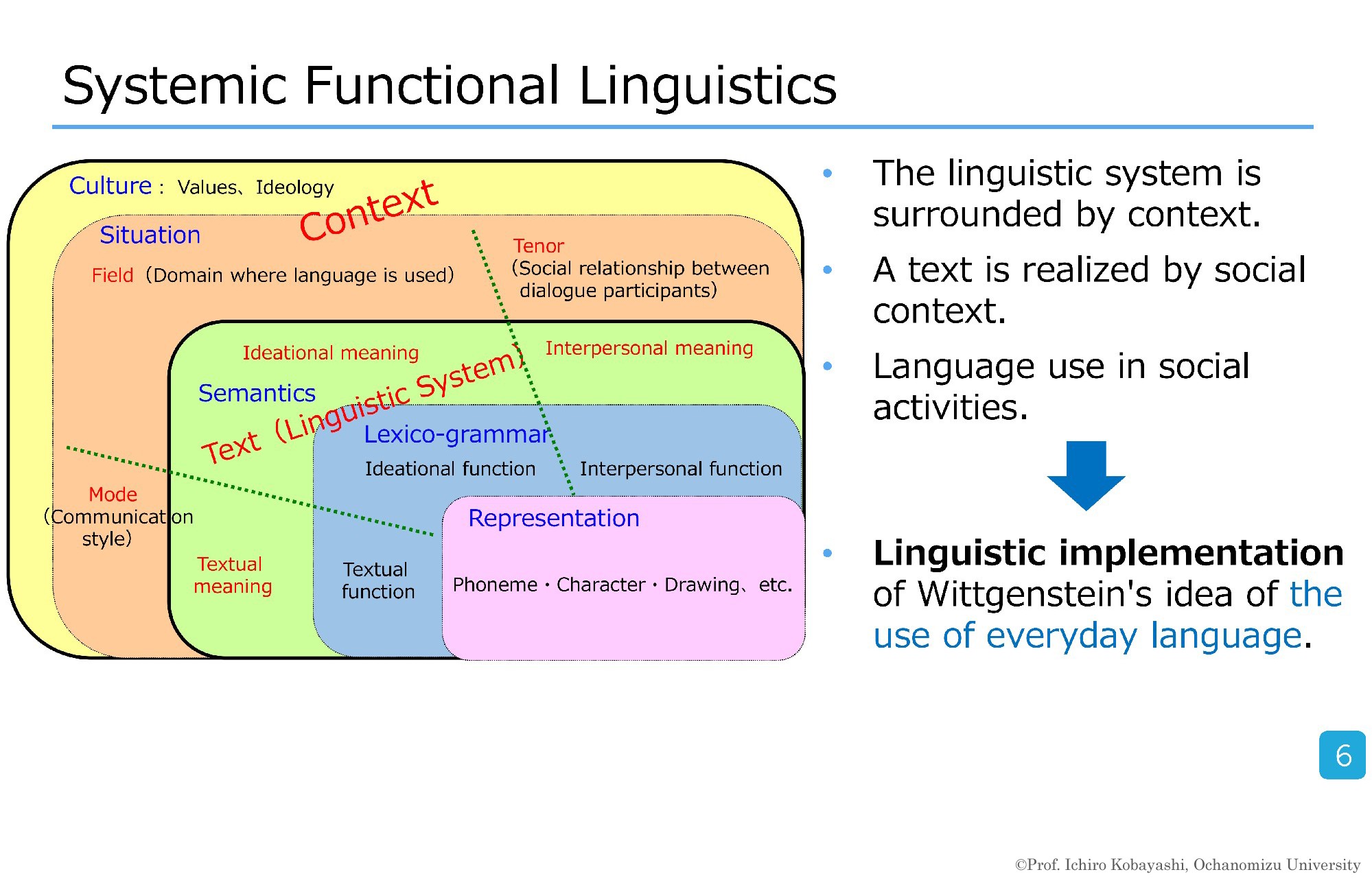
Systemic Functional Linguistics Theory has basic ideas for the use of language in social activities. These ideas correspond to the linguistic implementation of Wittgenstein's idea of the use of everyday language.
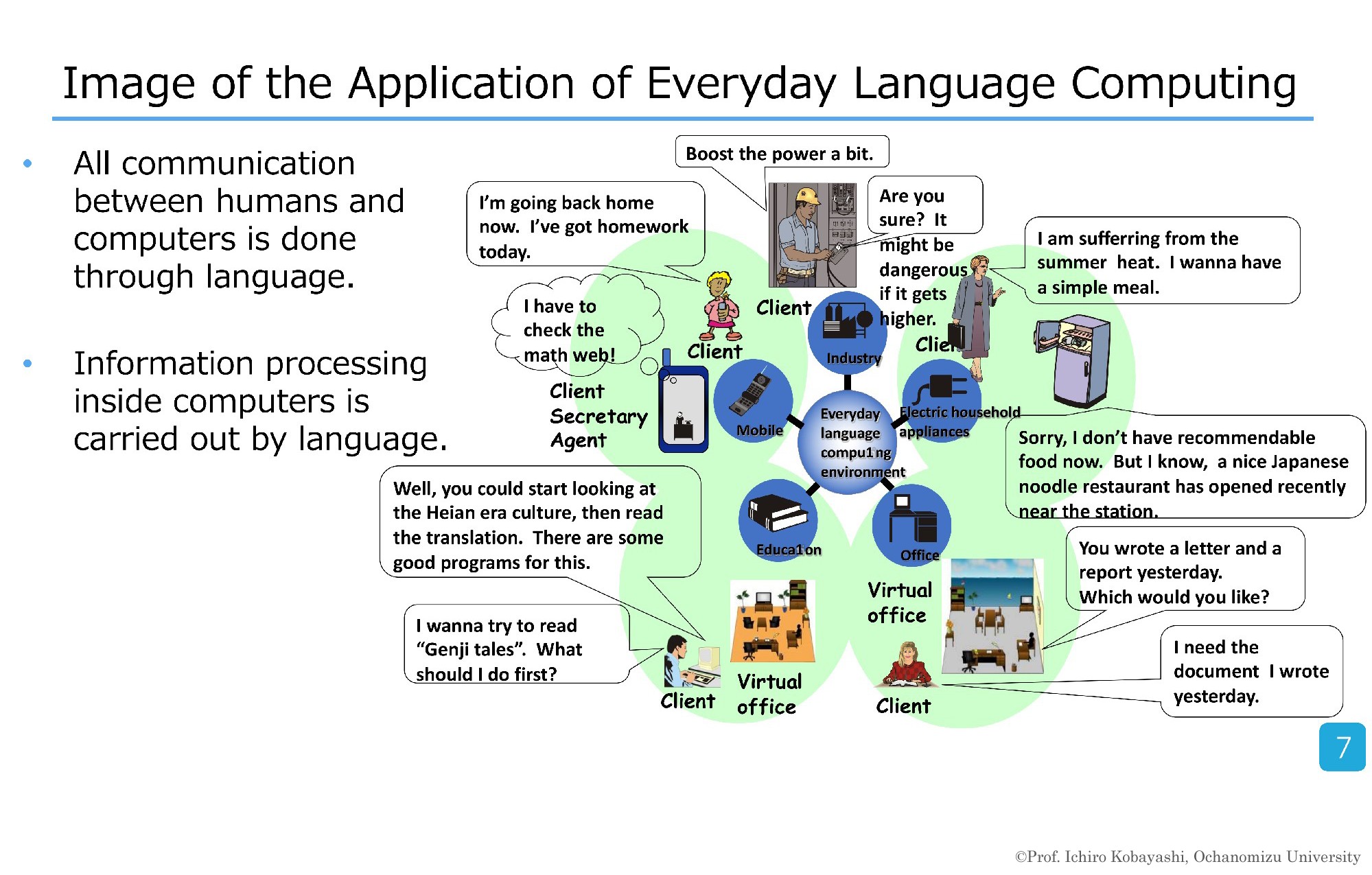
ELC consists of five elemental technologies.

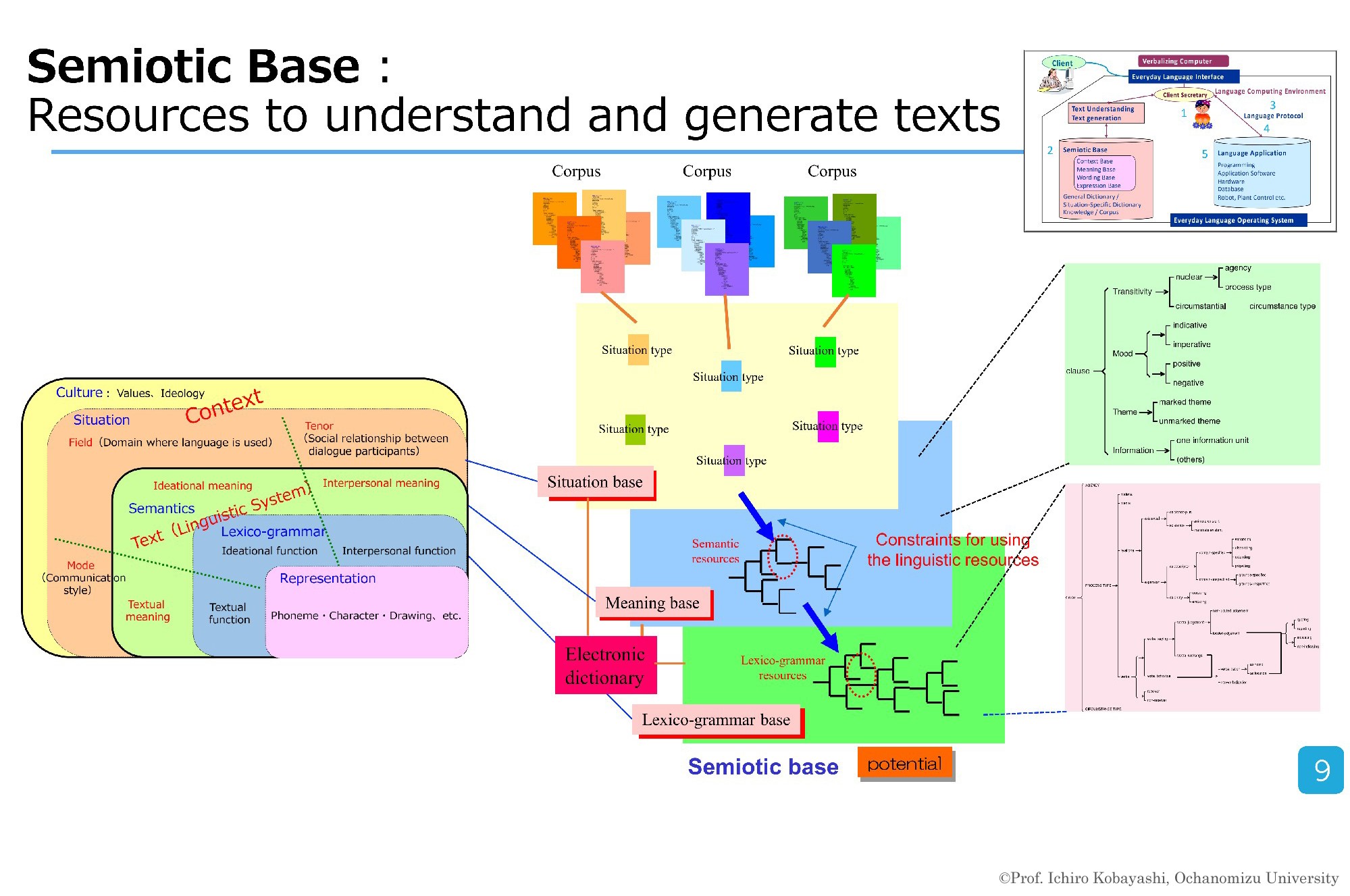
A semiotic base is like a knowledge base consisting of resources for understanding and generating language, but unlike a general knowledge base, it has the same structure as the linguistic system in SFL, with a hierarchical selection mechanism for language resources based on the situation. This is supposed to represent the use of language in social activities.
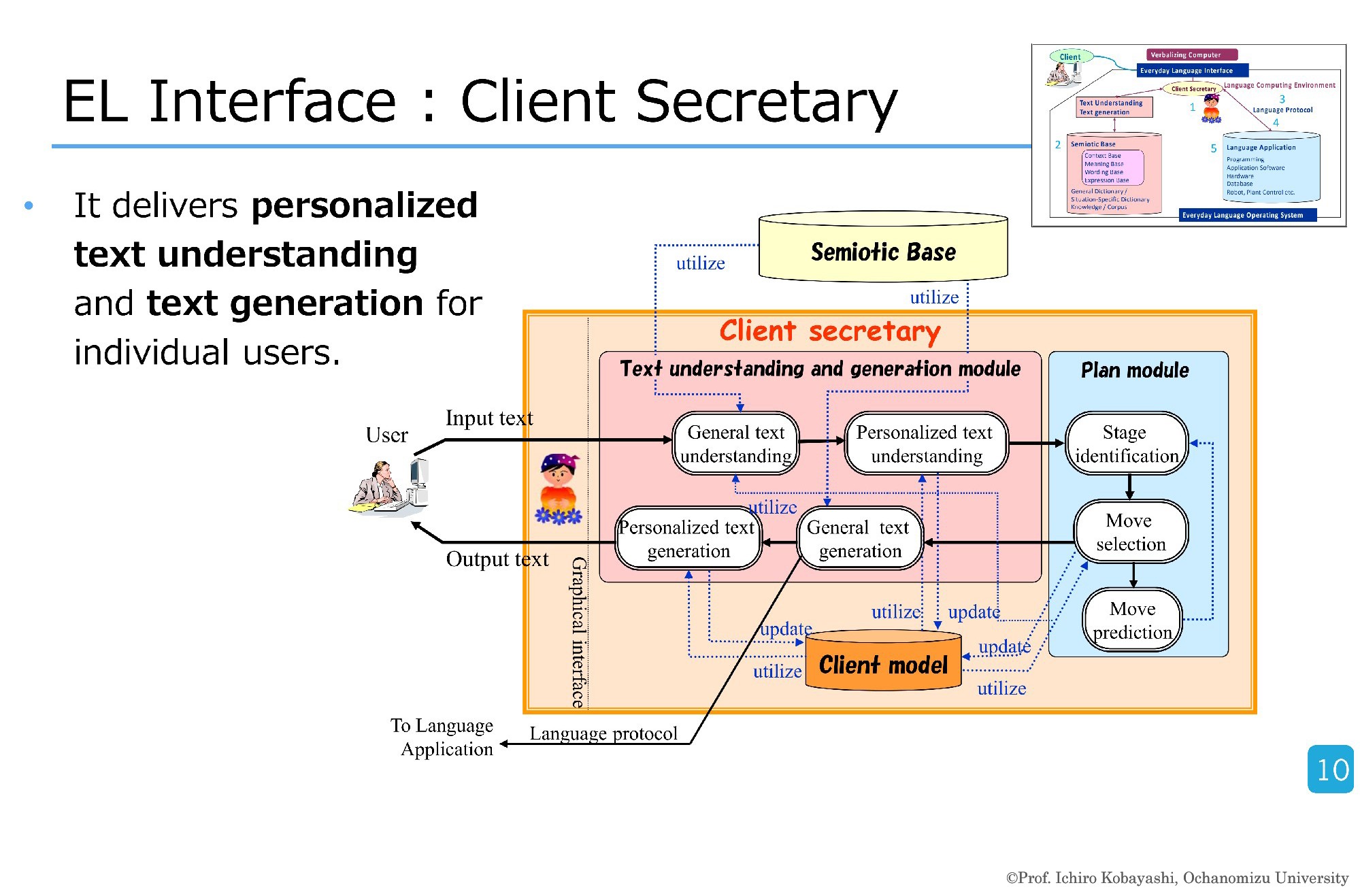
Everyday Language Interface delivers personalized text understanding and text generation for individual users.
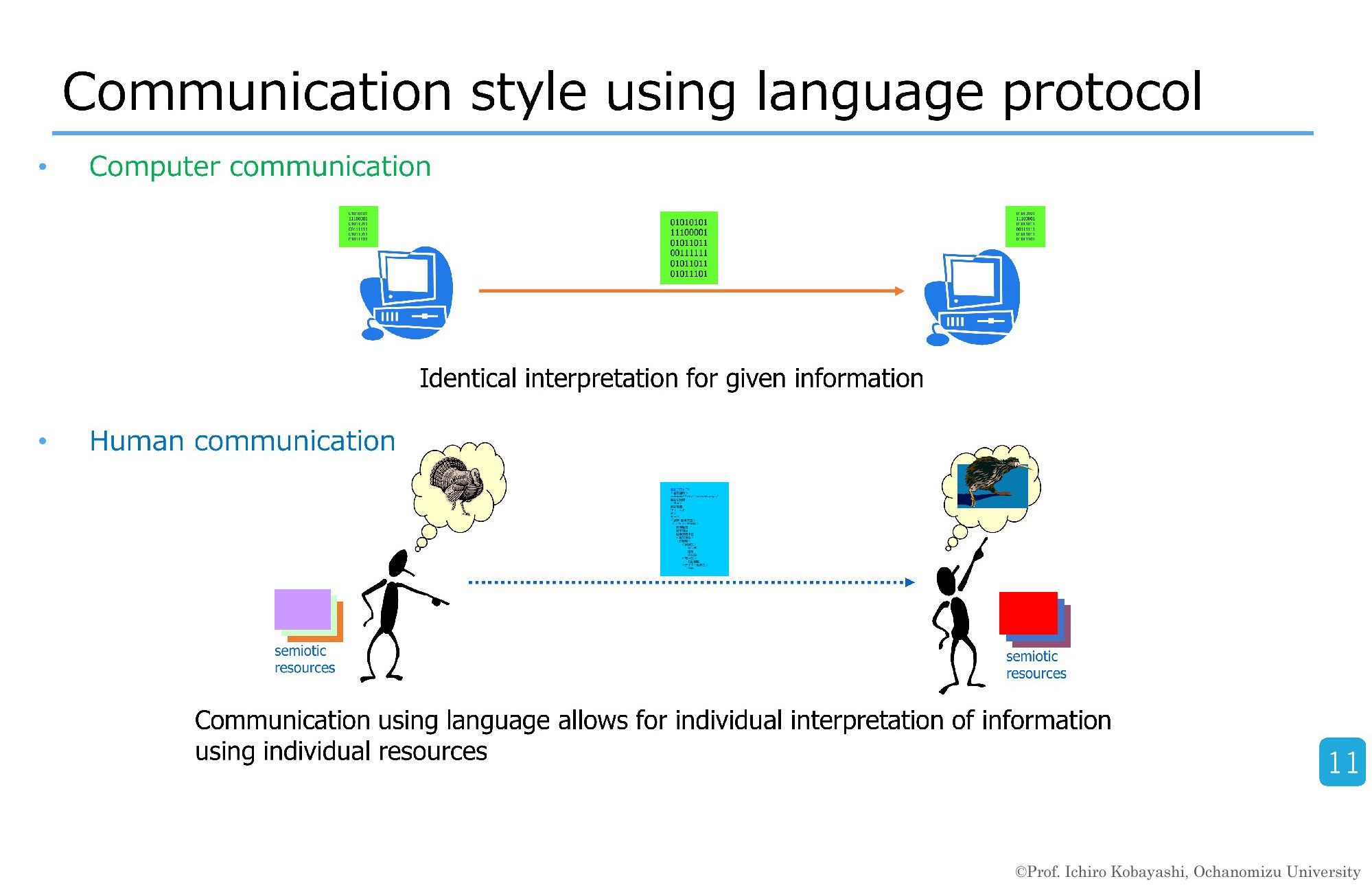
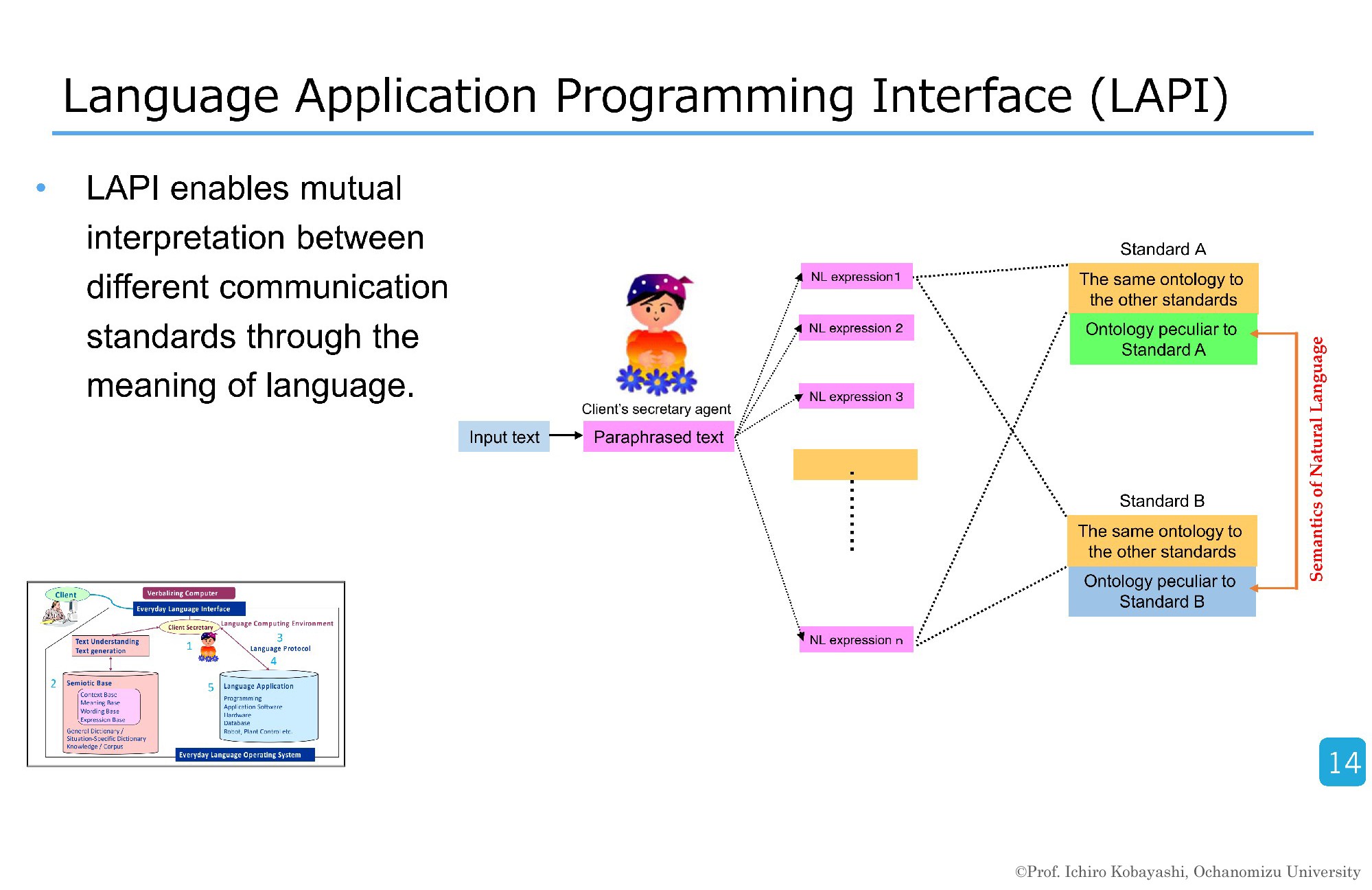
We proposed a communication standard called language protocol, that converts computer communication protocols into language. As for computer communication, identical interpretation for the given information is performed. On the other hand, human communication using language allows for individual interpretation of information using individual resources.
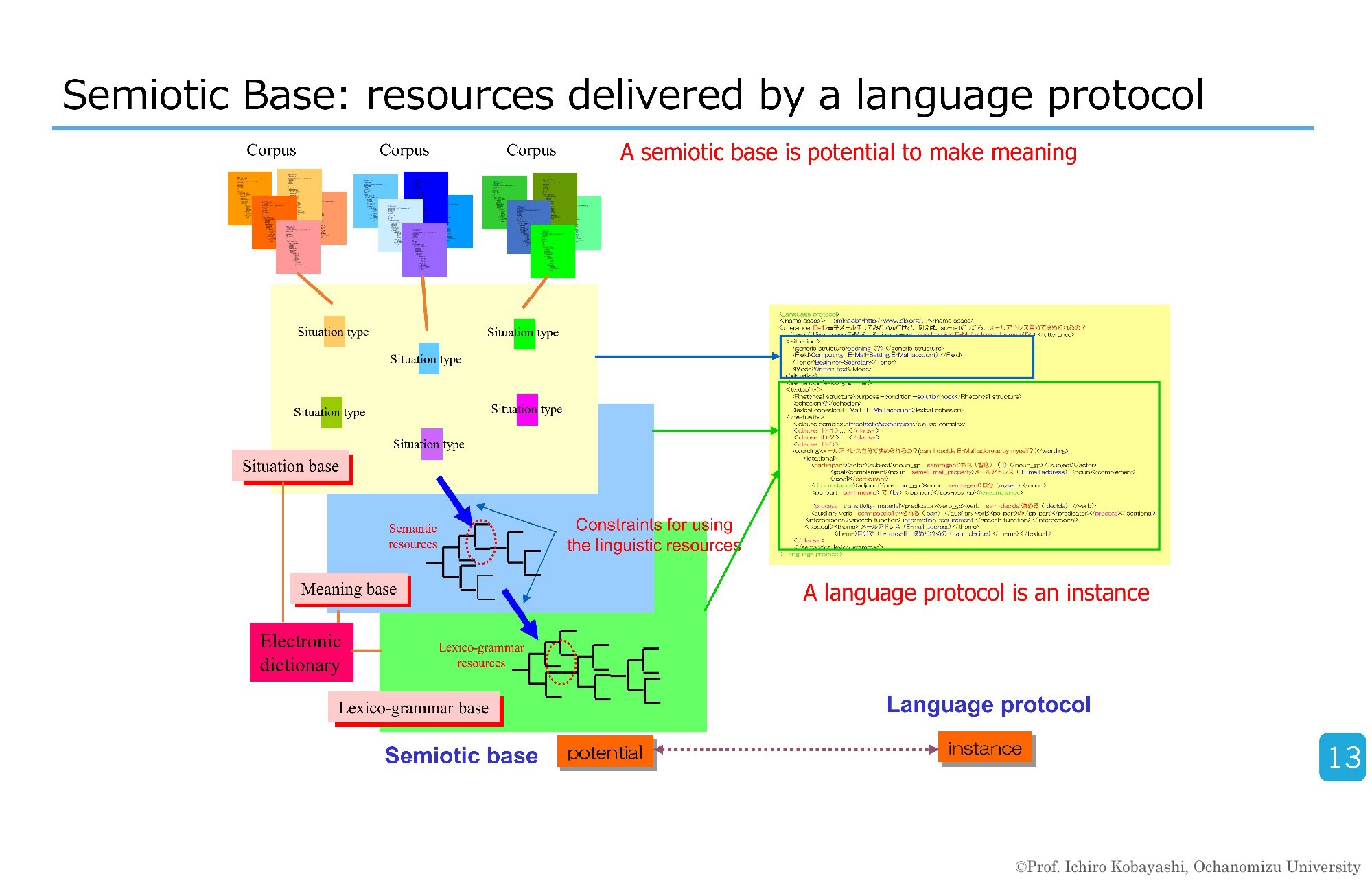
Language protocol enables a style of communication that relies on the recipient's interpretation of his or her statements. Statement, that is, input text is transformed into language protocol and it is interpreted by the Client B's secretary agent so that Client B can easily understands Client A's statements. As well as communication between humans, language protocol enables communication between human and application software or between application software. By changing all protocols into languages, communication can be established under the flexible semantic interpretation that languages have.

The content of a language protocol is described by the resources of the SB. In other words, SB can be seen as potential for meaning-making, and a language protocol is an instance of the potential.
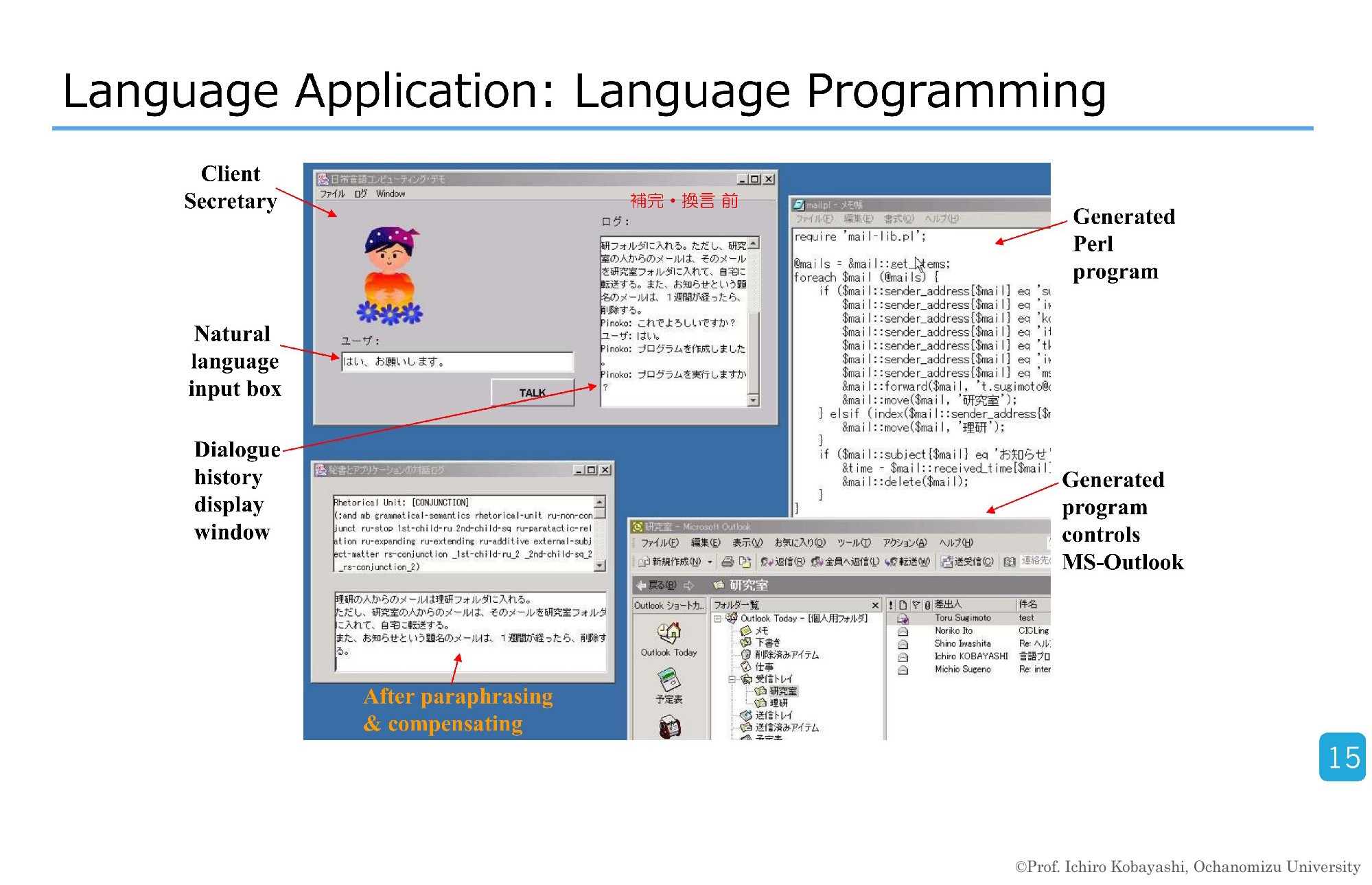
We have developed several applications that can be operated using language. This is the application that can make a computer program by language. Users can ask an agent called “Client secretary” to perform mailer operations using natural language. Client secretary understands the user's request from their speech, generates a program to operate the mailer, and manages emails by operating the mailer based on that program.
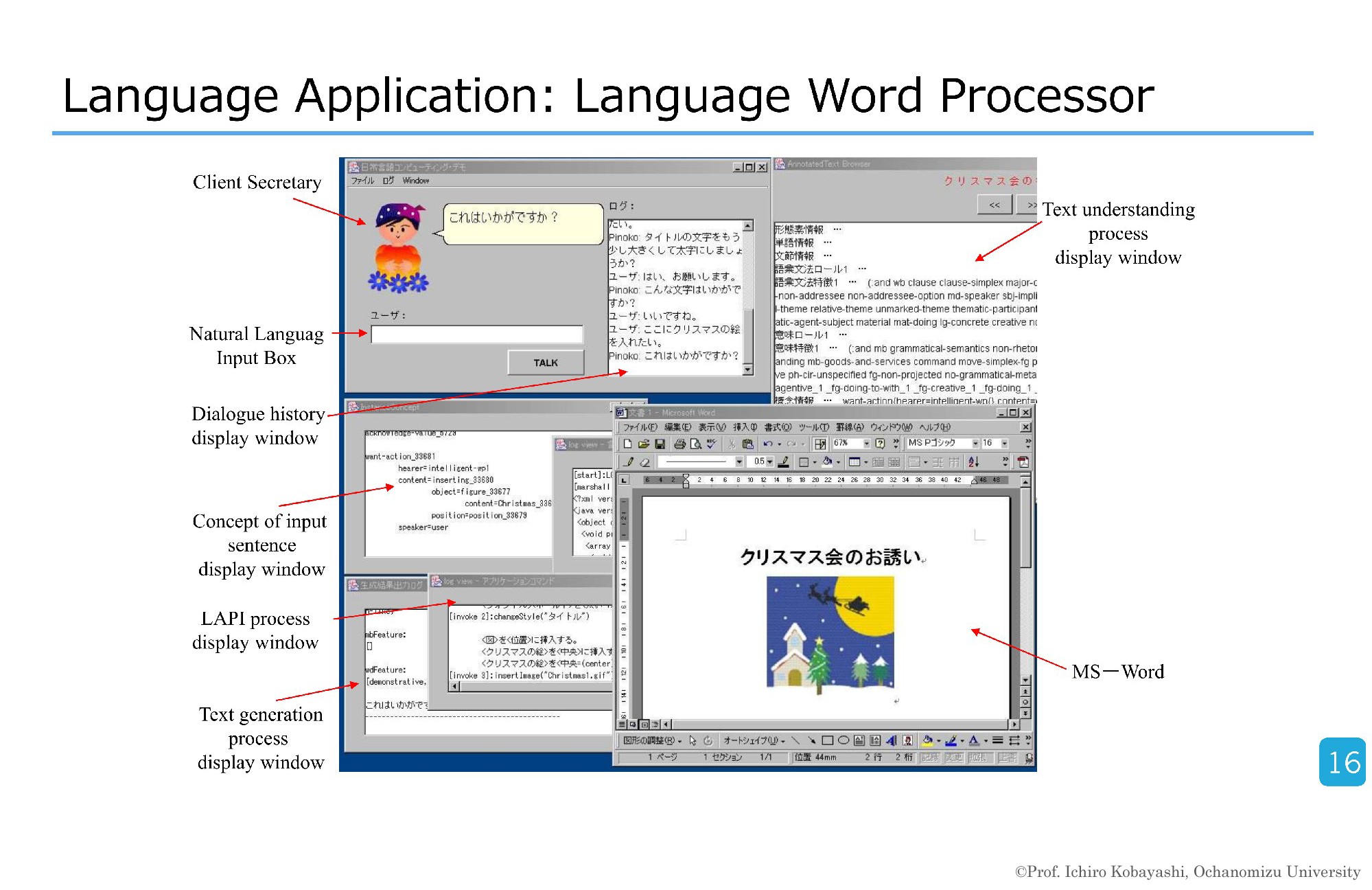
This is the application that can make documents by operating MS Word by language. Similar to Language Programming, users can request the Client Secretary to create documents using MS-Word in natural language. The Client Secretary understands the user's request for changes to the document format and creates a document according to the user's preferences.
著作・口頭発表
- [3]
- Michio SUGENO, "Toward Intelligent Computing", 5th Int. Fuzzy Systems Association World Congress (IFSA'93), Seoul, Korea, 1993. (Plenary Talk)英語

